Serving Modesto, CA and surrounding areas. (209) 447-0491
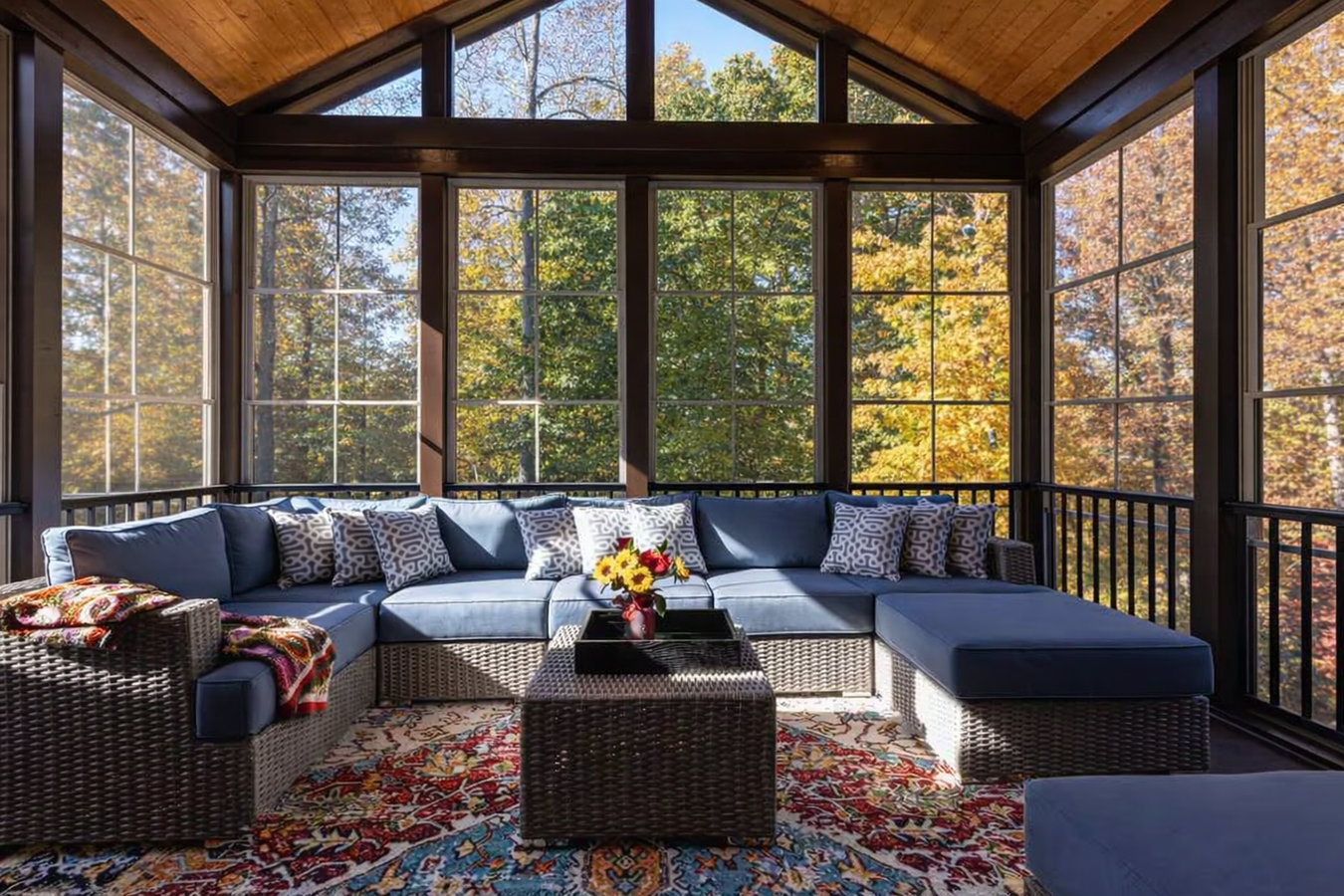
BrightSpace Modesto Sunrooms & Patios builds sunrooms, patio enclosures, and all-season rooms for Lodi homeowners who want to enjoy their outdoor space year-round. We have served the Central Valley for over a decade, and we reply to every Lodi inquiry within one business day.
Lodi summers hit 100°F for weeks at a time, and your patio becomes unusable by June. An all-season room with climate control keeps you comfortable even when the thermometer climbs past 105, so you never lose half the year to heat.
Winter tule fog settles over Lodi from December through February, and an unheated patio goes cold and damp for months. A fully insulated four-season sunroom stays warm and bright on the greyest January morning, giving you twelve months of use instead of six.
If you already have a concrete patio slab, enclosing it with glass panels and a solid roof transforms dead space into a real room. Many Lodi homes have patios poured in the 1960s or 1970s that are structurally sound but never used because they offer no protection from sun, wind, or bugs.
A three-season room covers spring, summer, and fall in Lodi, which is nine to ten months of the year. Because Lodi winters are mild compared to most of the country, you lose only a few weeks in the coldest part of January and February, making this one of the best-value additions for Central Valley homeowners.
Adding a sunroom to your Lodi home creates new living space without the cost and disruption of a full interior addition. Many of Lodi's older ranch-style homes were built with small floor plans, and a sunroom addition gives you the extra room you need without touching your existing layout.
Every Lodi home is different, and a custom sunroom lets you match your existing roofline, trim, and exterior materials so the addition looks like it was always there. In established neighborhoods like those near downtown, that kind of craftsmanship protects your curb appeal and your relationship with your neighbors.
Lodi sits in the Central Valley, where summer temperatures regularly exceed 100°F from late May through early October. A sunroom built with standard glass and no heat control becomes an oven by July, unusable for months at a time. The difference between a room you actually use and one that sits empty all summer comes down to choosing the right glass and window placement from the start. Heat-rejecting glass blocks the worst of the afternoon sun while still letting in light, and a north or east-facing room stays far more comfortable than a west-facing one that bakes all afternoon.
Winter brings a different challenge. Lodi's tule fog season runs from December through February, and the dense, damp air settles against siding, trim, and rooflines for weeks at a time. A poorly sealed sunroom will show condensation on windows, cold drafts around door frames, and eventually mold in corners where moisture has nowhere to go. The clay soil under most Lodi homes swells when wet in winter and shrinks when dry in summer, and that constant movement is what causes cracked driveways and uneven concrete slabs. A sunroom built on a foundation that ignores this soil behavior will settle and shift within a few years, which is why hiring an experienced sunroom builder makes a real difference.
We have been pulling building permits through the City of Lodi Building Division for more than a decade, and we know the submittal requirements, the review timelines, and what the inspectors look for on final walkthroughs. That familiarity keeps your project moving and prevents the kind of mid-job permit delays that turn a three-week build into a two-month headache.
Lodi has a distinct identity built around its wine country, and the city draws residents who value that character. The neighborhoods near downtown, around Lodi Lake Park and along Pine Street, have homes that date back to the 1940s through 1970s. These are Craftsman bungalows and ranch-style homes on modest lots, and many still have their original concrete patios and foundations. The newer subdivisions on the north and east sides of town look very different - stucco homes on smaller lots, built in the 1990s through 2010s.
We serve homeowners all across Lodi, and we also work regularly in Tracy and Stockton. Each city has its own building department and its own permit process, but the climate challenges are the same: brutal summer heat, winter fog, and clay soil that moves with the seasons.
You call or submit a request online, and we respond within one business day to schedule an on-site visit. We ask a few basic questions about your property and what you are hoping to build, so we show up prepared.
We visit your Lodi home, measure the space, check your existing foundation and framing, and talk through design options. This is when we discuss cost ranges and address any permit or HOA questions, so there are no surprises later.
Once you sign the contract, we apply for your building permit through the City of Lodi. Permit review typically takes two to four weeks, and we keep you updated on status so you know when construction will start.
Construction takes one to three weeks depending on the size and complexity of your sunroom. We handle foundation work, framing, glass installation, and all required inspections. You get a final walkthrough and all permit sign-off paperwork before we consider the job done.
We serve Lodi homeowners with transparent pricing, full permit handling, and designs built for Central Valley heat and fog.
Lodi is a city of about 68,000 people in San Joaquin County, sitting between Sacramento and Stockton in California's Central Valley. Known as the Zinfandel Capital of the World, Lodi has built a strong identity around its wine grape region. The city has its own downtown along Pine Street, with a mix of older commercial buildings, locally owned shops, and restaurants that give the area a distinct center. Roughly 57 percent of Lodi's housing units are owner-occupied, and the median home value sits around $380,000 to $400,000. These are working and middle-class homeowners who invest in maintaining their properties.
The neighborhoods closest to downtown include Craftsman bungalows from the early 1900s and ranch-style homes from the 1950s and 1960s, often with wood siding, older concrete foundations, and mature trees. Newer subdivisions on the north and east edges of town were built in the 1990s through 2010s and feature stucco-clad, single-story or two-story homes with tile roofs and attached garages on smaller lots. We serve homeowners across the city, from the historic blocks near downtown to the newer streets out by the Lake Yosemite area, and we also work regularly in nearby Stockton and Modesto.
Call today for a free estimate and see how we design sunrooms that stay comfortable in every season.
